Remix Hits the App Store: From Mini-App to Native iOS
Remix just launched a native iOS app. Here's the journey from Farcaster and Telegram mini-app to the App Store, and why native beats mini-app friction.

Remix is on the App Store. You can download the native iOS app right now: apps.apple.com/app/id6748889050.
I've wanted to write this post for a long time, and not because shipping an app is special. Plenty of people ship apps. It's because of where we started. Remix began life as a mini-app. We lived inside Farcaster. We lived inside Telegram. And those were the right places to start, but they were never going to be the finish line. Let me explain why.
Mini-apps are a brilliant cold start and a terrible home
A mini-app is the best onboarding trick I know. Someone's already in a feed, they tap a link, and they're playing your game in two seconds with no install, no account screen, nothing. For a TikTok-for-games platform trying to prove that AI-made games are actually fun, that frictionless first touch was everything.
But mini-apps live in someone else's house. You're a guest. The host controls notifications, the host controls the surface, the host controls whether your thing even shows up tomorrow. Every retention loop we built, Leagues, seasons, creator rewards, had to fight through a layer we didn't own.
And here's the quieter problem: mini-apps cap your ceiling on intent. People in a chat app are in chat-app mode. They'll play a quick round, sure. But they don't come back to play. There's no icon on their home screen. There's no muscle memory. The whole "open Remix because I want to" behavior had nowhere to live.
Native fixes that. An icon on the home screen is a tiny piece of real estate, but it's your real estate. It's the difference between being somewhere people pass through and being somewhere people go.
Why native actually wins for a game feed
The pitch for Remix has always been the same: it's a game feed. You scroll, you find a game, you play it instantly, free-to-play, no friction. That experience is better in a native app, full stop. Smoother scroll. Faster loads. Real push when your League is about to reset or your game just got promoted in the feed.
Compare it to how the big platforms distribute. Roblox is an app you open on purpose. Subway Surfers is an icon you tap. The reason those games print attention is that they meet players exactly where players already browse for games (the App Store) instead of asking them to remember a link in a chat thread.
That's the move. Meet people where they look for games. And on iOS, that means ASO (App Store Optimization) actually matters now. People search "fun free games" and "puzzle games" and we get to show up there, organically, the way a game platform should.
There's a deeper point here too. Remix is an AI game maker and a no-code game development tool. Vibe coding a game and instant-publishing it is wonderful, but a creator's reward depends entirely on distribution. The native app is distribution. Every creator who ships now gets a real storefront and a real audience behind their game instead of a link that dies in someone's inbox.
The feed is full of games worth opening the app for:
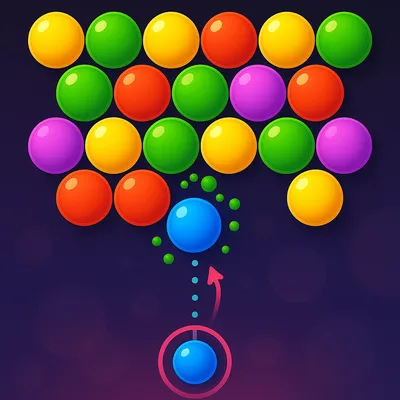
Bubble Bluster is exactly the kind of bright, instant, one-more-round game that lives or dies on distribution. On a native home screen, it gets the shot it deserves.
What this unlocks
We didn't abandon the mini-apps. They're still the best cold start on earth. We just stopped letting them be the ceiling. Cold start in the feed, retain in the app. That's the whole strategy.
If you make games: this is the moment your work gets a real front door. If you just want to play: there are thousands of free-to-play games waiting and a new one every time you scroll.
Download Remix on iOS at apps.apple.com/app/id6748889050, or jump in at remix.gg. Then go make something.
— Bobby